
Why Do I Snap at Him Over Something So Small?
Nov 04, 2026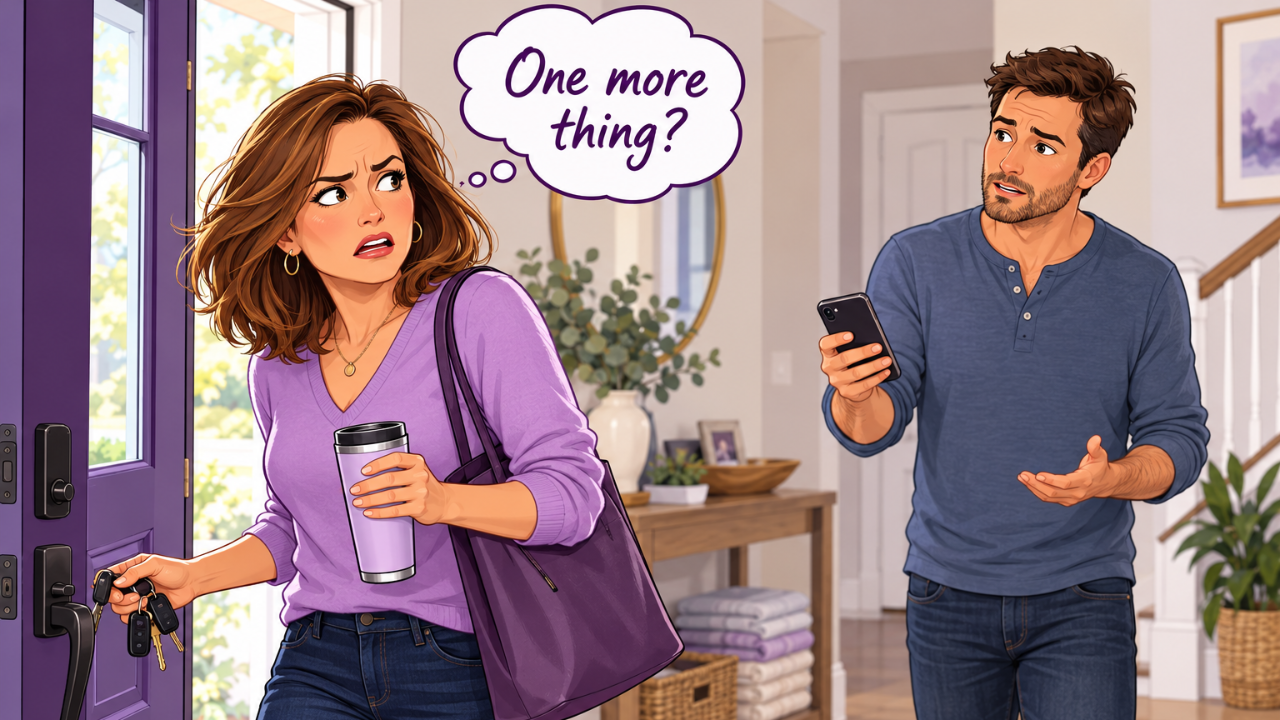
You’re trying to get out the door. You’re already late, your hands are full, and you’re mentally going through everything you need to get done.
Then he asks you a question.
You tell him you can’t look right now.
“It only takes two seconds.”
And that’s when you snap.
“Why do I have to figure everything out?”
He gets defensive. He was just asking a question. You didn’t have to bite his head off.
Now you’re frustrated about the original request, upset that he doesn’t understand, and probably wishing you’d said it differently.
You know how quickly this can turn into an argument. You’ve been here before.
So why is it still happening?
What those “two seconds” mean to you
He may be thinking about how quickly you could answer.
You’re thinking about everything you’re already doing.
You have to stop, put something down, look at what he’s showing you, make another decision, and then get yourself moving again.
And when you’ve said you can’t do it right now, hearing “it only takes two seconds” can feel like your answer didn’t count.
Maybe the thought that flashes through your mind is, Can’t you see I’m struggling here?
Or, Why does what you need have to happen before I can finish what I’m doing?
Those thoughts matter. They help explain why a small request can land so heavily.
But he may never hear any of that. He hears the sharp response, reacts to it, and suddenly you’re defending your tone instead of explaining what you need.
Catching it while you’re still in the conversation
It’s much easier to think of a better response later, when you’re alone in the car.
I could have just told him I was overwhelmed.
Of course you could have. You can see that now.
The practice is learning to notice what’s happening while you still have a chance to choose your next words.
What happens just before you snap?
Maybe you start moving faster. Your jaw tightens. You let out a loud sigh. Or you hear yourself thinking, Seriously? One more thing?
That can become your cue to say something sooner.
“I’m already running late. I can’t look at that before I leave.”
You don’t need a long explanation. You need a sentence that tells him what you can do right now.
And if he says it will only take two seconds?
“I hear you. I still can’t do it right now.”
You may feel uncomfortable holding that limit. You may want him to understand immediately so you can leave without tension.
Sometimes you’ll need to let the discomfort be there and keep getting ready.
What if he’s still upset?
This is where the practice gets harder.
You say it more clearly, and he still looks annoyed. Or he tells you you’re being difficult.
You might feel pulled to explain again, prove how busy you are, or give in so the tension will stop.
But his reaction doesn’t automatically mean you need to change your answer.
You can acknowledge him and keep your limit.
“I understand you wanted my help. I’m not available right now.”
You’re responsible for how you speak to him. You can make room for his frustration without making it your job to remove it.
And if you’ve already snapped?
You can come back and repair it.
“I’m sorry I snapped at you. I was overwhelmed, and I spoke harshly. When I say I can’t help right now, I need you to take that seriously.”
That gives you a way to take responsibility for your words and still address what happened.
You don’t have to turn the whole conversation into a case against yourself.
If this keeps happening around the same responsibilities, it also deserves a conversation when you’re both available. Who handles what? What can each of you decide independently? What happens when one person is busy?
Learning to respond differently matters. So does addressing the situations you keep arguing about.
You want more than another apology
You want to get through a rushed morning without ending up in a fight.
You want to say you’re at your limit before you reach the point of yelling.
And when something does come out wrong, you want to know how to handle it without spending the rest of the day replaying the conversation.
That takes practice in the everyday moments where you usually get caught.
In my coaching, we work with those moments. We look at what happens before you react, what you’re telling yourself, and how to communicate what you need while you’re still frustrated.
If you keep thinking, “I knew better, so why did I do it again?” book a clarity call with me.
We’ll talk about where you’re getting stuck, what you want to handle differently, and whether my coaching is a good fit for you.